... a Simple Clock
keep it simple
... turns into a Light Sculpture
Meet Old Friends ...
long time no see
As the Time Goes By
... in your imagination
Your Own Ideas
just explain with AI
A Beautiful Piece
... of furniture
It is a clock.
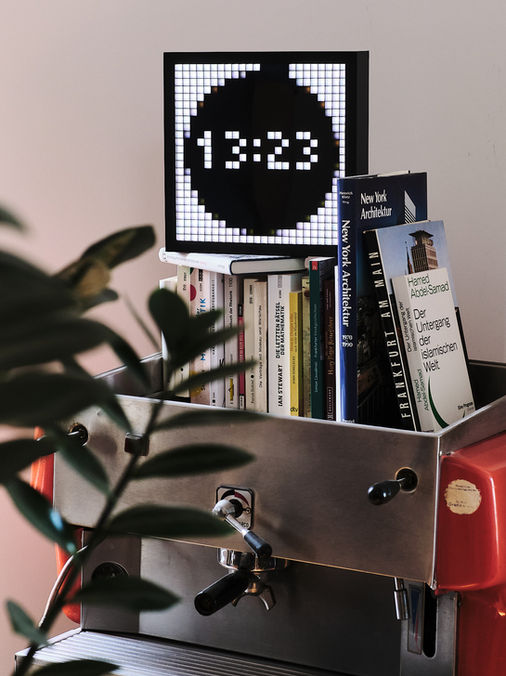
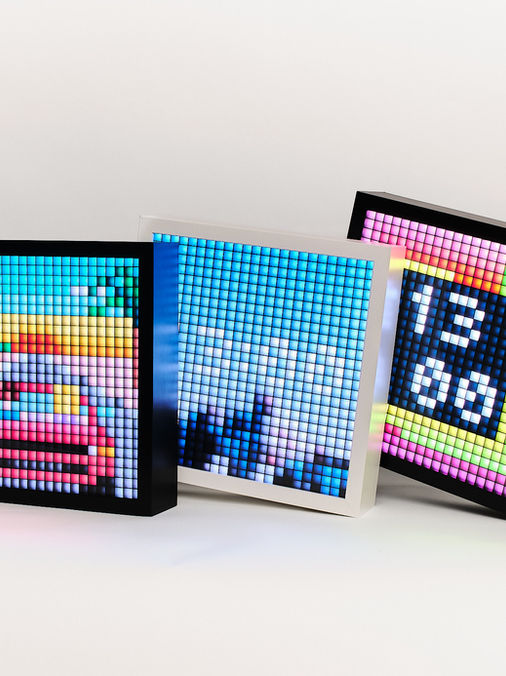
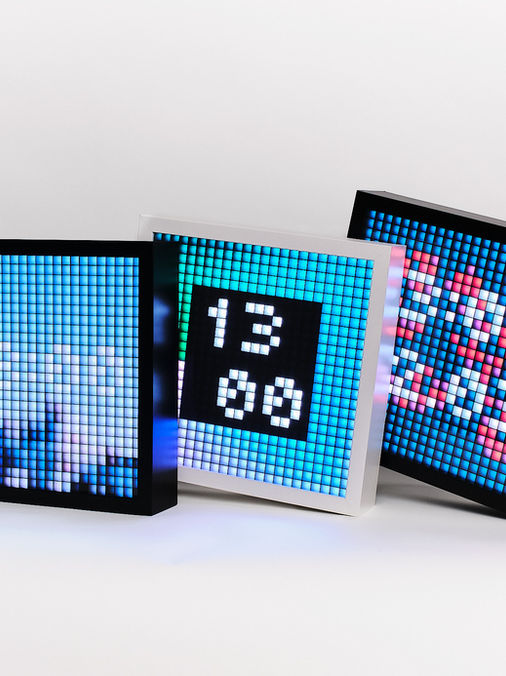
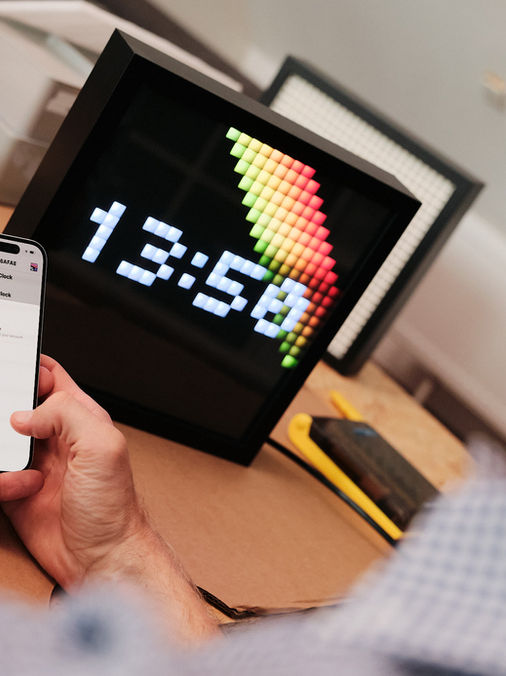
Three concentric paths, 576 LEDs, a new frame every second. Hours, minutes, seconds — computed, not recorded. It doesn't know the time: it recalculates it every 200 ms on the device. No tick, no hands. But undeniably a clock.
A light sculpture.
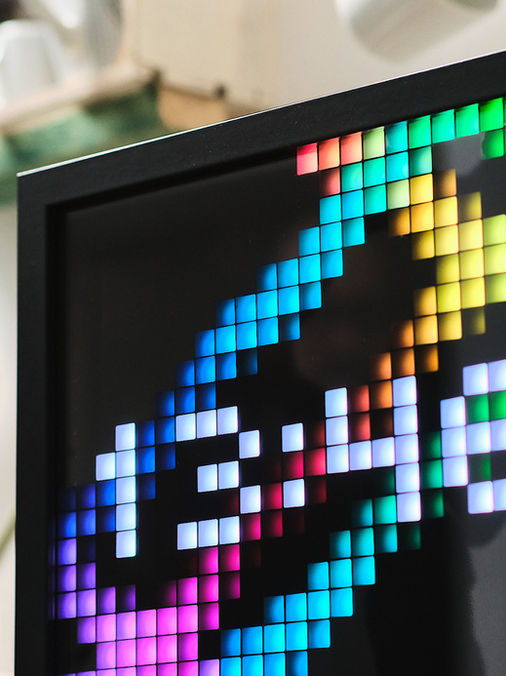
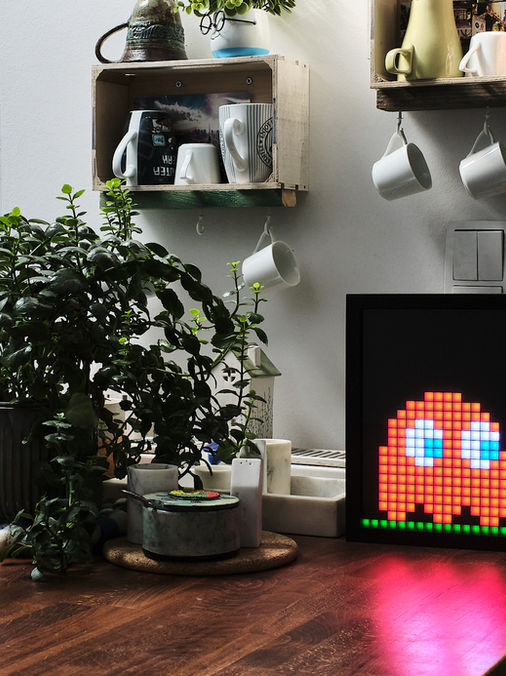
When no one is watching, it has its own ideas. 24 × 24 cells turn into an HSV wheel that keeps reshuffling itself — a small living painting on the wall. It happens to know it is 7:42 PM. If anyone asks.
A storyteller.
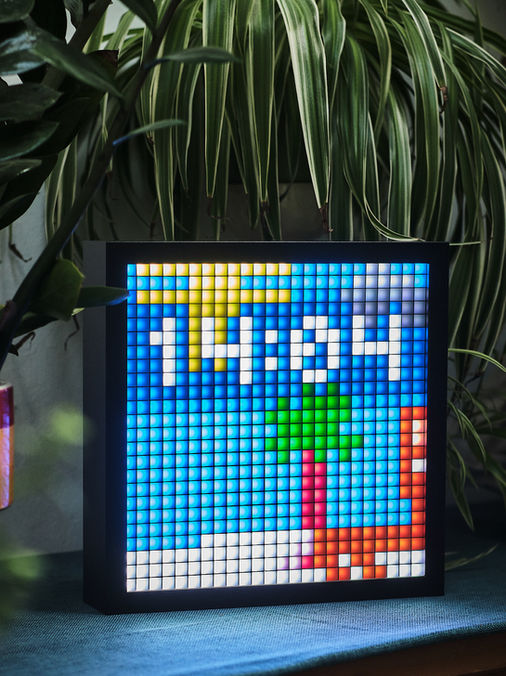
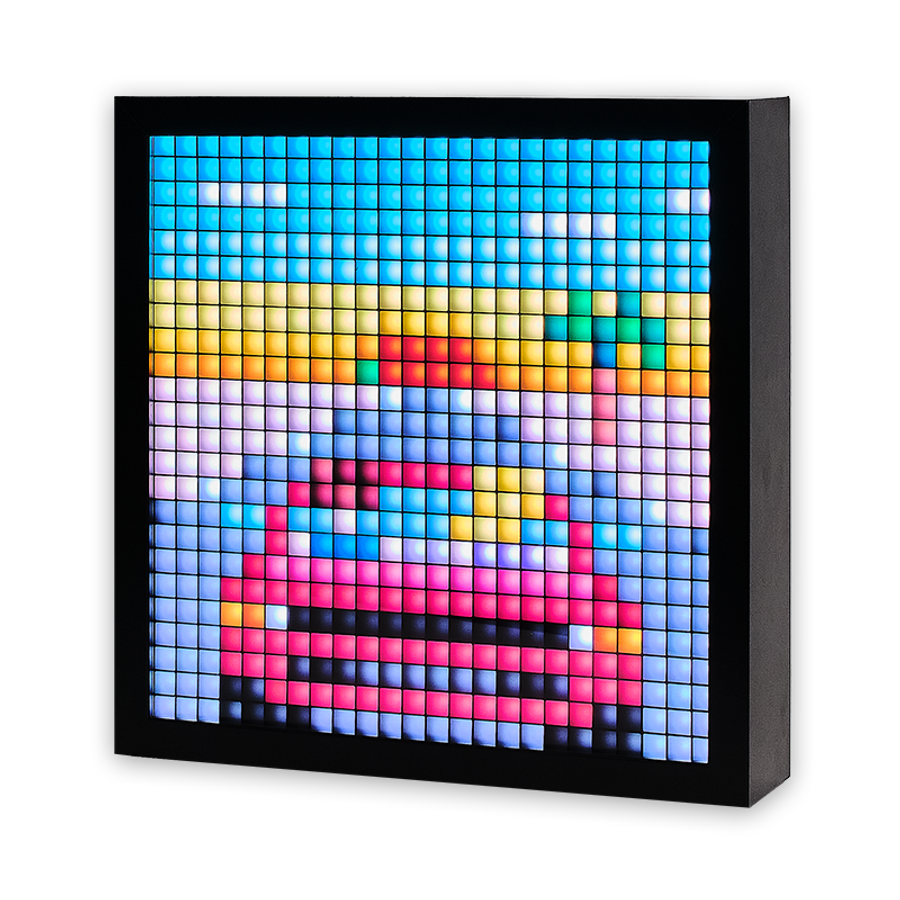
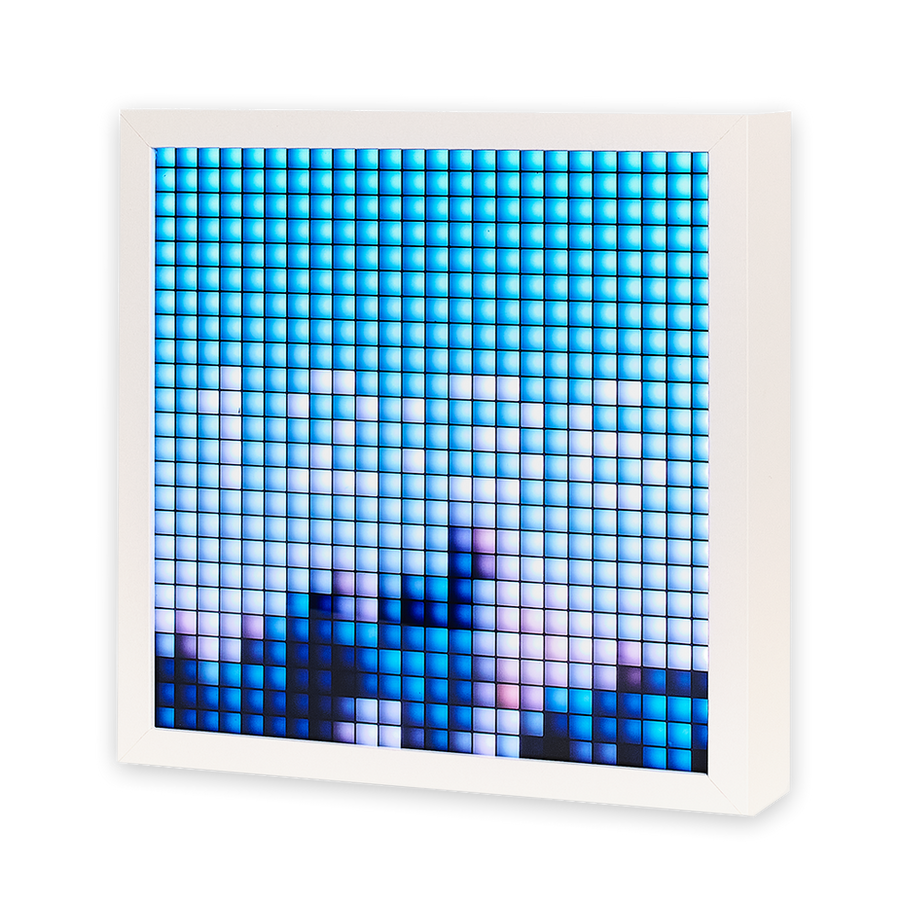
A sailboat, a horizon, a wave that keeps coming back. 24 × 24 pixels are enough for a landscape. Pixograms don't have to be "smart" — sometimes a quiet picture is enough, and your head fills in the rest. The most beautiful use of 576 LEDs is often the quietest.
A thinker.
Conway's Game of Life, running live across 576 cells. Every generation is computed on the device, in C#, on the Raspberry Pi inside the frame. No prerendered video, no loop, no cheat — a screen is allowed to just compute. Like a small aquarium where the fish are black and white and emerge from rules.
A piece of furniture.
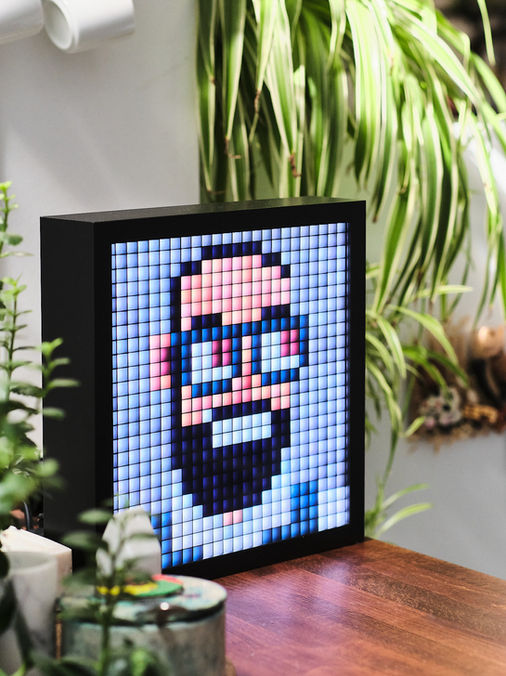
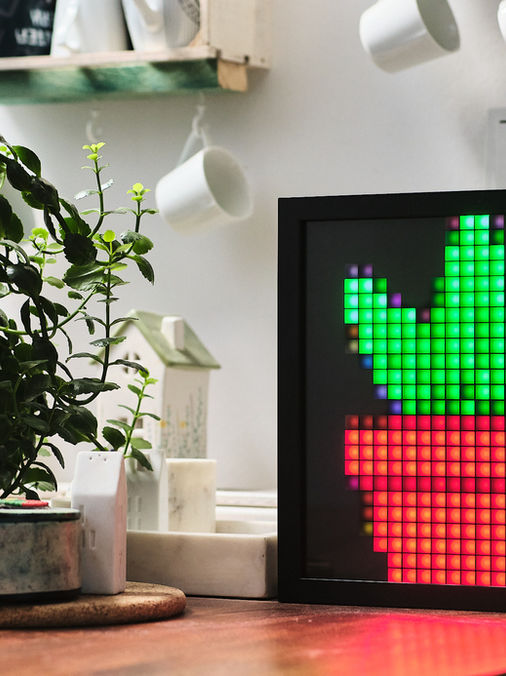
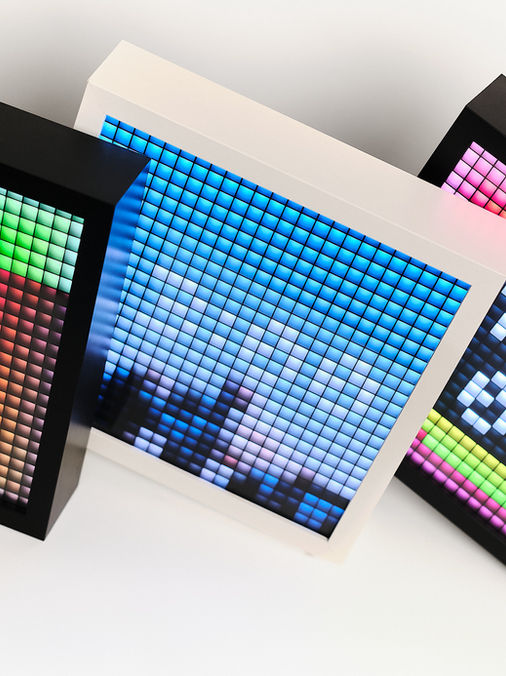
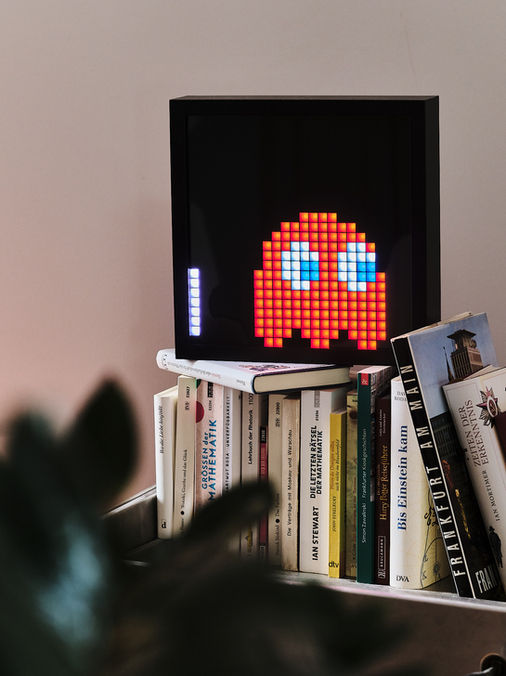
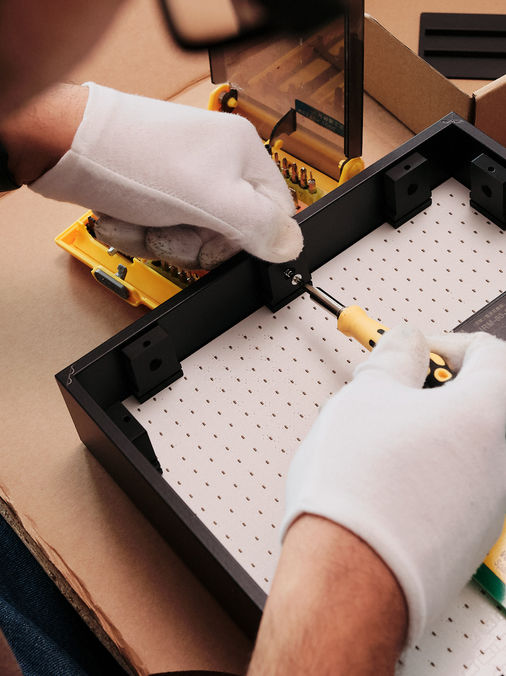
27 × 27 × 6 cm, 2 kg. Real glass, wooden frame, handcrafted in Germany. It hangs on the wall or sits on a shelf — and looks as good switched off as it does on. Plug in, connect Wi-Fi: it does the rest. Updates ship OTA, new pixograms ship through the app.
You write a function. It does the rest.
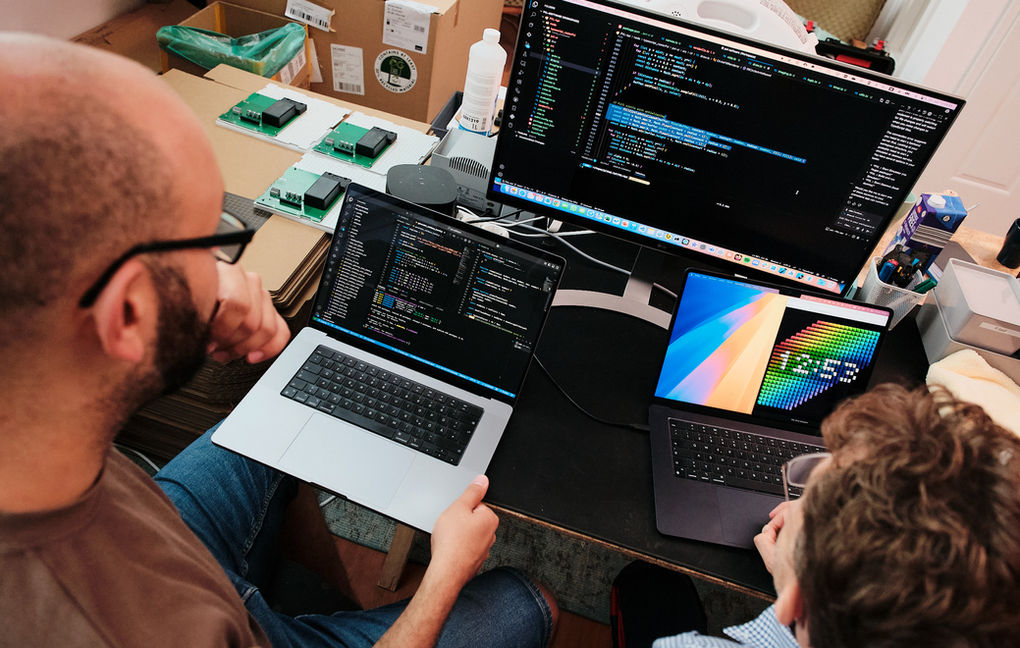
Every image above is a short C# file. `GetColor(x, y, step) → Color` — that's the whole API. Browser simulator with hot reload on every save, VS Code extension v1 with one-click publish. You write one line, the simulator shows it. Push it — it lands on the clock on your wall.
A hundred units. Made in Germany. Reserve one.
The PXL Clock Mk1 is made by Cumin & Potato in Germany, in a run of one hundred. DHL shipping in 2–4 business days. iOS and Android apps. NuGet library: Pxl. Discord: discord.gg/KDbVdKQh5j. PXL-JAM 2024 — community hackathon, three winners each get an Mk1.
The first thing you see.
You wake up, you turn around. It shows the time in a soft blue, no ringtone, no shock. You don't have to get up yet — but it's already waiting. Patient, quiet, dimmable. When the first sunbeam hits the window, it brightens.
You work. It glows quietly.
Focus mode. It knows when to step back. Colours that don't distract. Seconds you don't hear. The colour wheel keeps reshuffling, eventually you glance over, think "half past ten already", and keep going.
Lunch break. You look up.
A mountain silhouette, a sky that shifts colour. A brief trip elsewhere, without leaving the room. 24 × 24 pixels are enough for a landscape — if you are willing to look at it instead of scrolling past.
End of the day. It turns playful.
You lean back. It shows a sailboat on the open sea, a 24-second day-night cycle. You don't have to explain it — your head tells the story on its own. Beautiful things work like this: they give you just enough, so you fill in the rest.
Friends arrive. "What IS that?"
It becomes a conversation. Nested rectangles, a second running along the border, three people standing around it. "A clock." — "And what's it doing now?" — "Conway's Game of Life." — "You programmed it?" — "Yeah, in C#, five lines." It does the conversation for you.
You sleep. It just stays there.
Quietly, in the dark. It dims itself, switches to a calm night pixogram at midnight — a slow colour gradient, nothing sudden. You don't need to switch it off. It just hangs there, 60 watts of 576 little fires, until morning.
Put it up. It handles the rest.
The PXL Clock comes from Germany, made by Cumin & Potato GmbH. €299, with code RONALD €274. Wi-Fi setup in under a minute, apps for iOS and Android. A hundred units per run — closer to a small furniture edition than a gadget. pxlclock.com, DHL shipping 2–4 days.
It is not a screen.
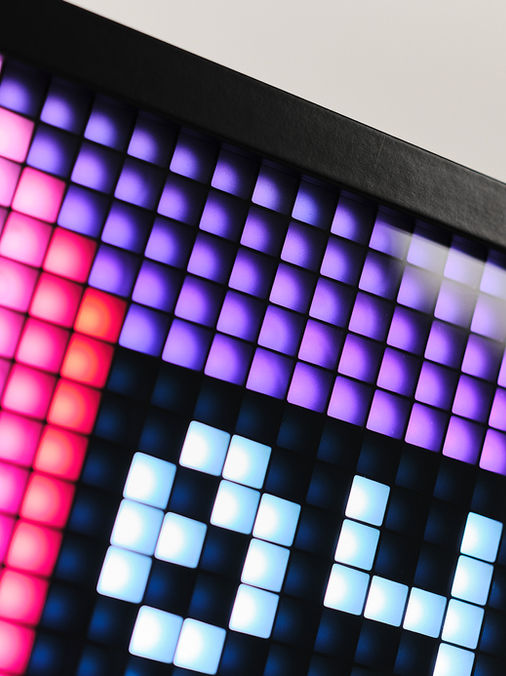
576 LEDs, individually addressable, behind real glass. No 4K, no streaming app, no algorithm to keep you scrolling. A wall of light — closer to a candle than to a monitor. "576 little fires", someone once said. We thought that fits.
Nothing pushes you anywhere.
No notifications. No "look here, click me, scroll down". It shows what it shows — a pixogram, a clock, maybe a landscape. If you look away, it doesn't notice. If you look back, it doesn't hurry. It moves at the speed of an aquarium.
Sometimes 24 pixels are enough.
A sailboat on the open sea, a 24-second day-night cycle. Sun, moon, stars, one pixel rocking with the waves. Not much happens. That's exactly the point. Pixograms don't have to be "smart" — sometimes a picture that breathes is enough.
But it does it beautifully.
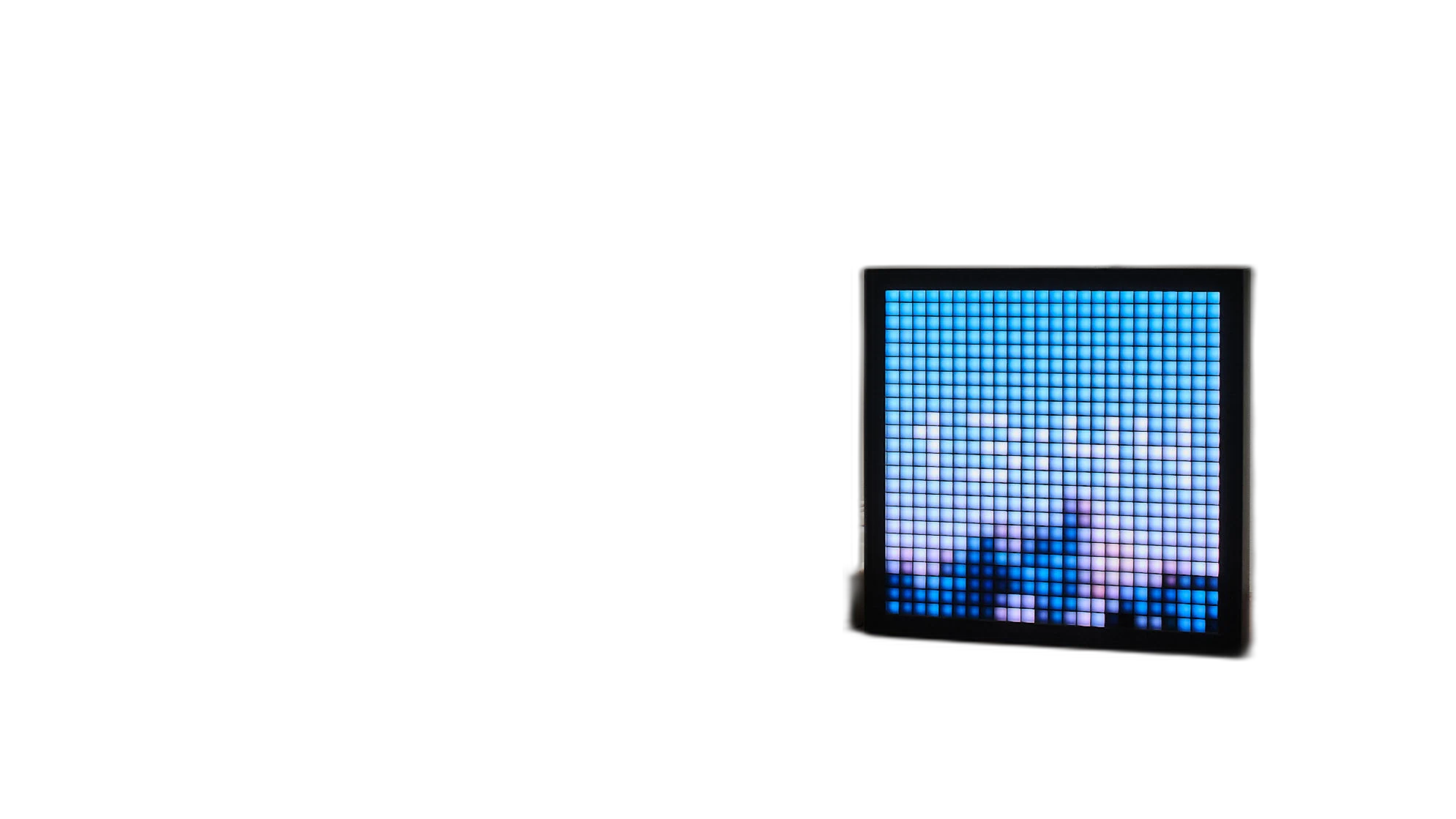
A mountain silhouette, a sky that shifts colour over ten minutes. Not an accurate mountain range. No real weather API. Just a pixel painting in slow motion that WOULD be distracting — if the motion weren't so slow that you only catch it in the corner of your eye.
Like an aquarium made of light.
Conway's Game of Life, running live across 576 cells. A small world of rules that develops itself. It sends no logs to a server, no data to anyone. It's one of the last screens that's just there — reporting nothing.
You can write your own.
But you don't have to. The PXL Clock ships with pixograms — you never have to touch a line of code. If you want, you write your own — in C#, four lines, browser simulator. If not, it just hangs there and does its job.
576 little fires, one clock.
The PXL Clock Mk1 — €299 regular, with code RONALD €274. 27 × 27 × 6 cm, 2 kg, real glass, handcrafted in Germany. Open source on GitHub (SchlenkR/pxl-clock), NuGet library Pxl, Discord community. A run of one hundred. If the idea fits you, sign up for the next batch. pxlclock.com.
It is not for everyone.
There are clocks that tell the time. There are clocks that count your steps. And there are clocks that are a bit like a Mini Cooper — not a Porsche. If you want a clock that just "works", you don't need this one. If you want one with a bit of personality: read on.
A 27 cm square, made in Germany.
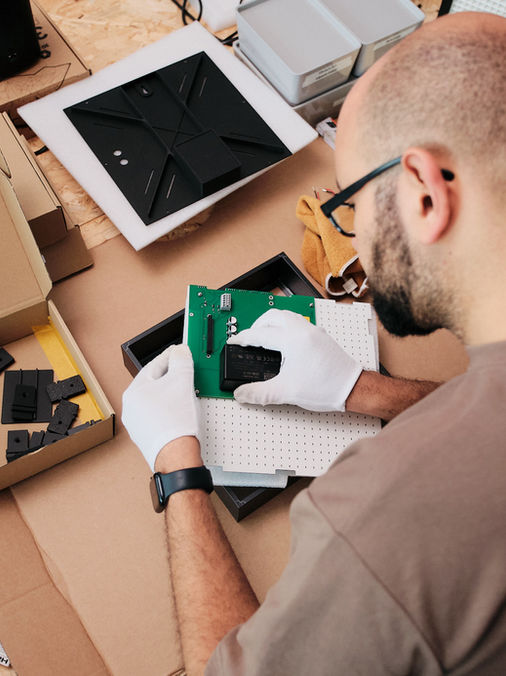
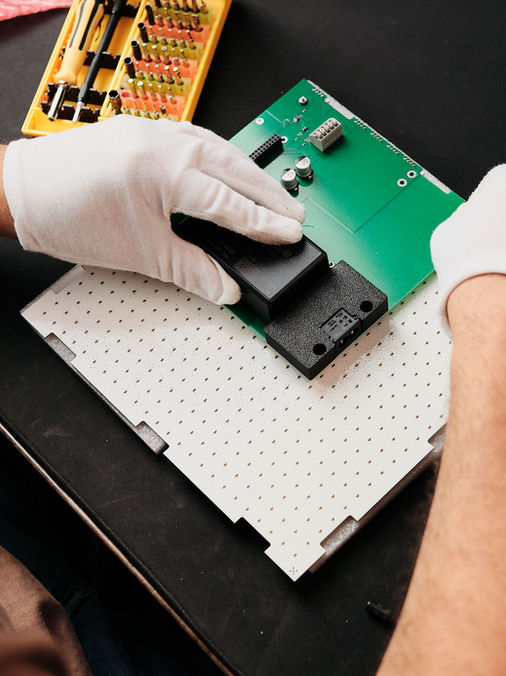
576 LEDs, real glass, wooden frame, a Raspberry Pi inside. DHL shipping from Germany, delivery in 2–4 business days, wall screw included. Wi-Fi setup in under a minute via the app. Out of the box it doesn't do anything wild — it tells you the time. The rest you discover.
Pixograms from the community.
576 cells, a new colour every second. It ships with a curated set of pixograms — sailboats, mountain silhouettes, Game of Life, a few playful colour wheels — written by us and the community. Pick what plays via the app. Or let it rotate automatically, if you prefer.
If you know C#: write your own.
The API is a single function: `GetColor(x, y, step) → Color`. Four lines per pixogram. Browser simulator with hot reload. VS Code extension v1, free in the Marketplace. 17 tutorial apps from "Hello Pixel" to "Pixel Access". No one is forcing you. But the door is wide open.
There is a community.
PXL-JAM 2024: a hackathon as part of the F# Advent Calendar (host: Sergey Tihon), three winners each get an Mk1. Discord (discord.gg/KDbVdKQh5j) for pixogram talk. GitHub: SchlenkR/pxl-clock. Hashtag: #pxlclock. We're still small. But we're real.
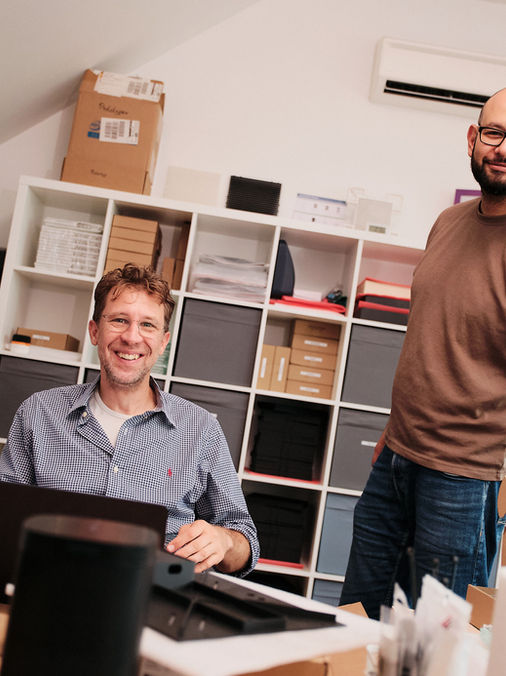
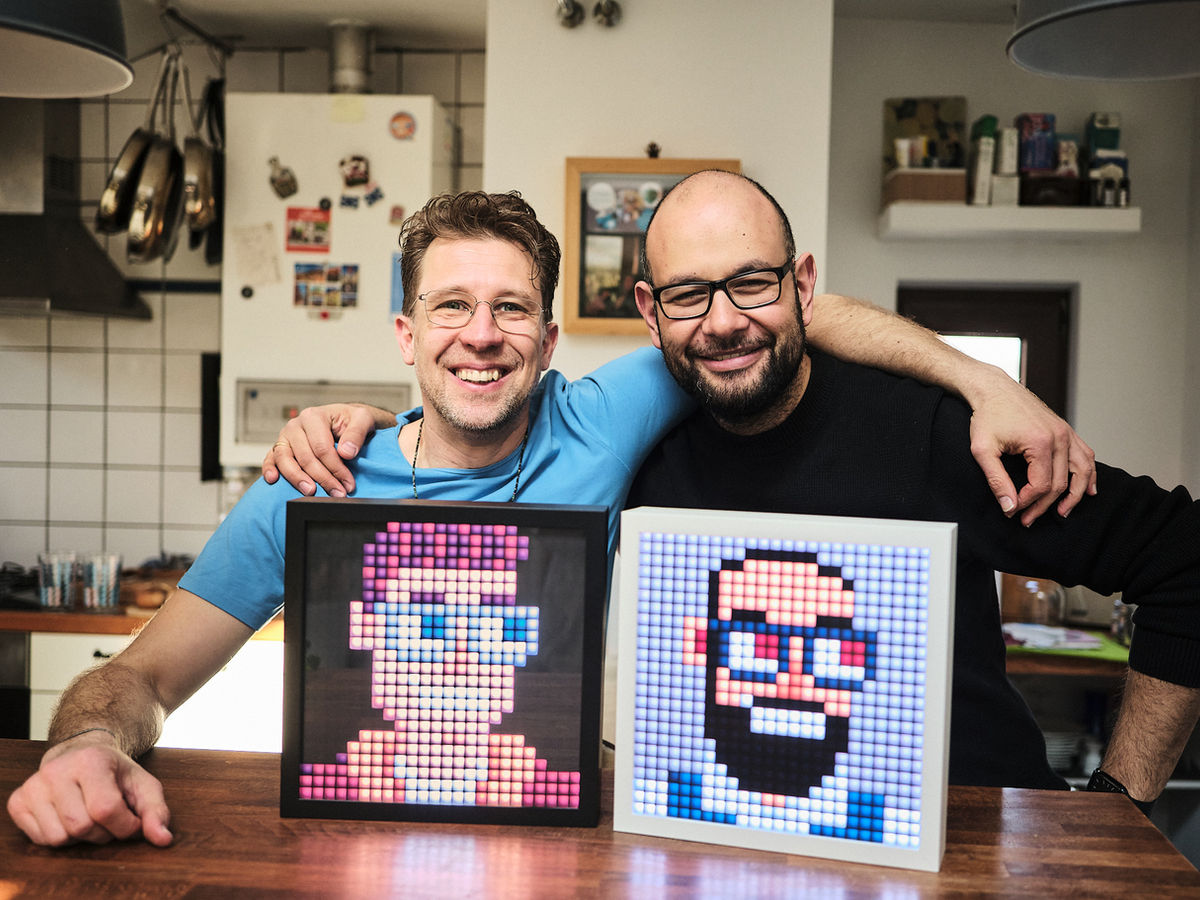
Ronald and Sefa, from Germany.
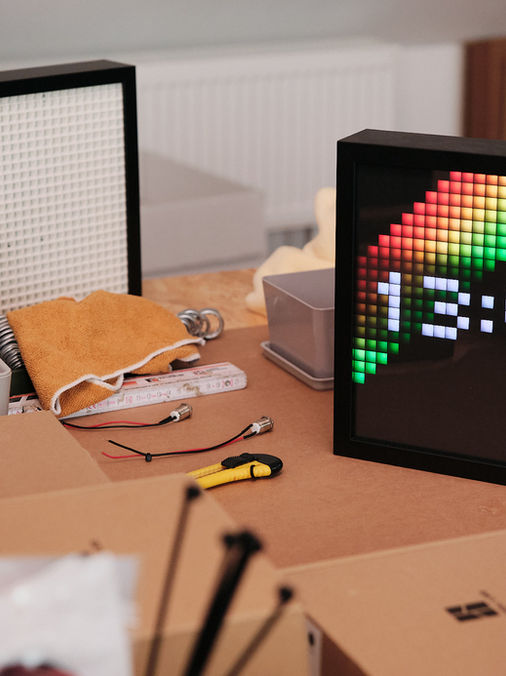
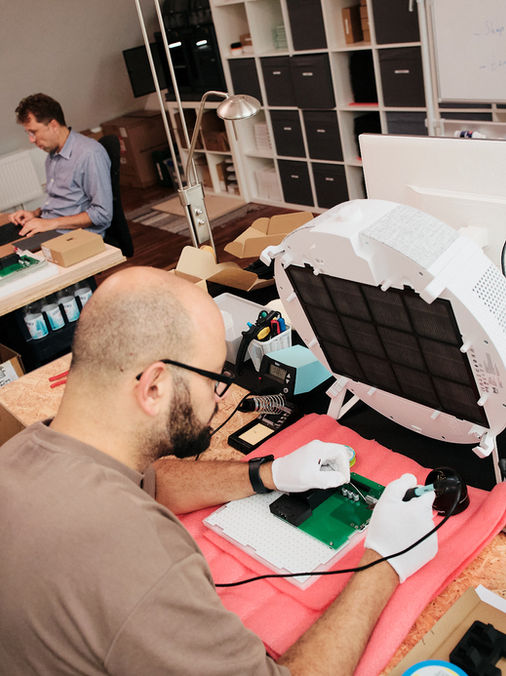
Cumin & Potato GmbH. Two people, one workshop, a passion project that's become big enough to ship a hundred units per run. We're not profitable. We build the Mk1 because we love it. If that sounds familiar, we probably have something in common.
A hundred units. Reserve yours.
PXL Clock Mk1 — €299 regular, with code RONALD €274. 27 × 27 × 6 cm, 576 LEDs, real glass, made in Germany, apps for iOS and Android, OTA updates, NuGet library Pxl, VS Code extension v1, Discord community. Order at pxlclock.com. DHL shipping 2–4 days.
It starts with one pixel.
Every screen starts with one question: which colour goes where? Here you write the answer yourself. `GetColor(x, y, step) → Color`. Four lines of C#, one function per pixogram. That's the whole API. The browser simulator shows your pixel immediately — on every save.
Then one becomes 576.
24 × 24 pixels. A square, small enough that every pixel matters — large enough that a pixel is allowed to do nothing, sometimes. It's a deliberate constraint: less resolution, more decision. What is necessary, what would be noise.
Pixels turn into a clock.
Three concentric paths: seconds outside, minutes between, hours inside. One of the simplest implementations in the world — and suddenly there is time on the wall. You don't need a time library, no NTP. The clock knows what it's doing.
The clock becomes a stage.
A sailboat is a pixogram. A mountain silhouette is one. A Game of Life is one. You write your own, push it with one click to the clock in the living room. Browser simulator previews it, VS Code extension pulls it in, the app publishes it. Three clicks, one pixogram.
Browser simulator. Hot reload. VS Code.
You don't need the clock to start. localhost:5001 spins up the simulator in the browser — hot reload on every save. The VS Code extension v1 includes the simulator, plus file tree, run/stop, one-click publish over LAN. Your first pixogram: three minutes.
PXL-JAM. Discord. Open source.
Open source on GitHub: SchlenkR/pxl-clock. The library is Pxl on NuGet. Discord: discord.gg/KDbVdKQh5j. PXL-JAM 2024 — the community hackathon, hosted by Sergey Tihon as part of the F# Advent Calendar. Three winners each get an Mk1. If you write C# or F#, you're part of it.
Reserve an Mk1.
Cumin & Potato GmbH builds a hundred units per run, in Germany. €299, with code RONALD €274. Apps in the App Store and on Google Play. DHL shipping 2–4 days. If you want to write pixograms: VS Code extension, the Pxl library, the Discord, the GitHub. You start with one pixel. The rest you discover.